Project case study
NEXBALL: taking a football idea into the factory
How could an illuminated smart football become a product proposal? A 2025 HFLC submission records the students’ conversations with industry professionals, exploration of a prototype, and work on costs and pricing.
Taking the idea to industry professionals
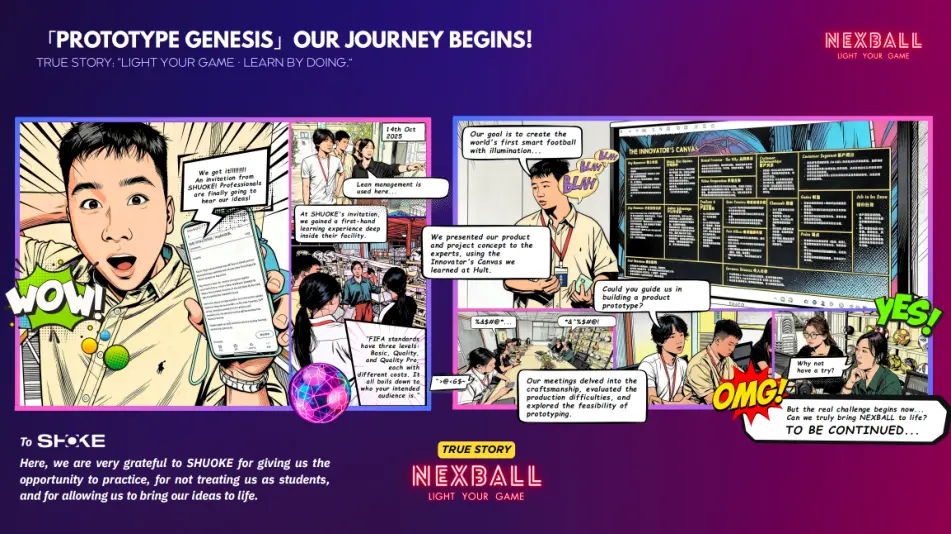
The NEXBALL concept was an illuminated smart football. In a comic included in their submission, the students recorded a visit to SHUOKE’s facility. They presented their product and project concept to professionals and asked for guidance on making a prototype.
They used the Innovator’s Canvas learned at Hult to explain the idea. Their discussions covered craftsmanship, production difficulties and prototype feasibility, as well as the relationship between football standards, costs and the intended audience. The concept now involved specific questions to work through.
Accounting for development, production and operations
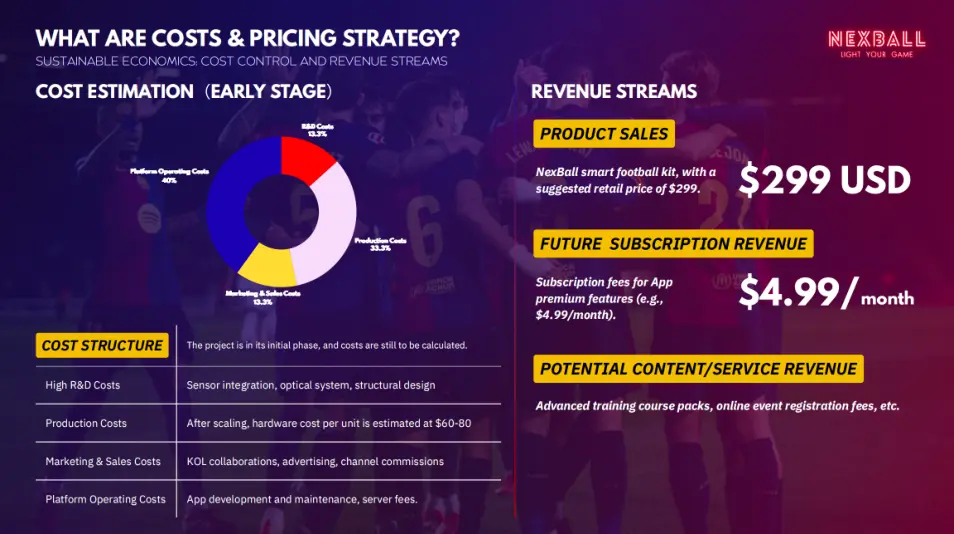
The costs and pricing page separates research and development, production, marketing and sales, and platform operations. Sensor integration, optics and structural design appear under development; app development, maintenance and servers appear under platform operations. These categories connect the product idea to the resources it would need.
The revenue section proposes a suggested kit price of US$299 and a future app subscription of US$4.99 per month. The submission also states that the project is at an early stage and costs remain to be calculated. These are assumptions for a proposed business model, rather than evidence of sales or revenue.
Presenting the proposal at the Global Finals
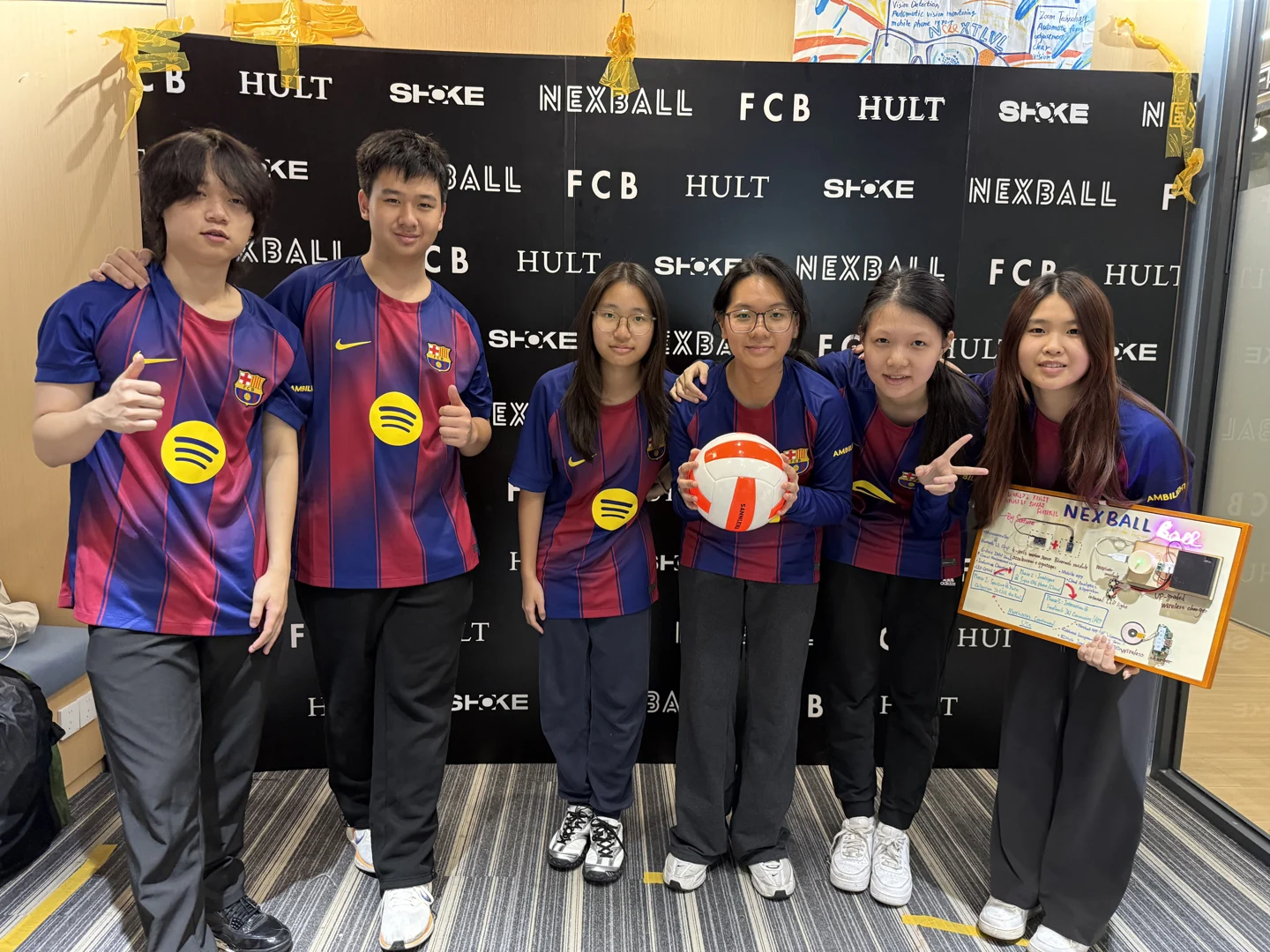
The NEXBALL team won first place in the 2025 HFLC Global Finals. Its submission shows specific work behind that result: explaining a concept to industry professionals, discussing whether a prototype could be made, and setting out proposed costs and revenue streams.
The comic ends with a question about whether the team can bring NEXBALL to life. That question helps locate the work’s stage of development: the competition produced a product proposal informed by industry discussions, with further manufacturing and commercial validation still ahead.
Based on the 2025 HFLC submission and competition record. Product features and prices describe the students’ proposal.